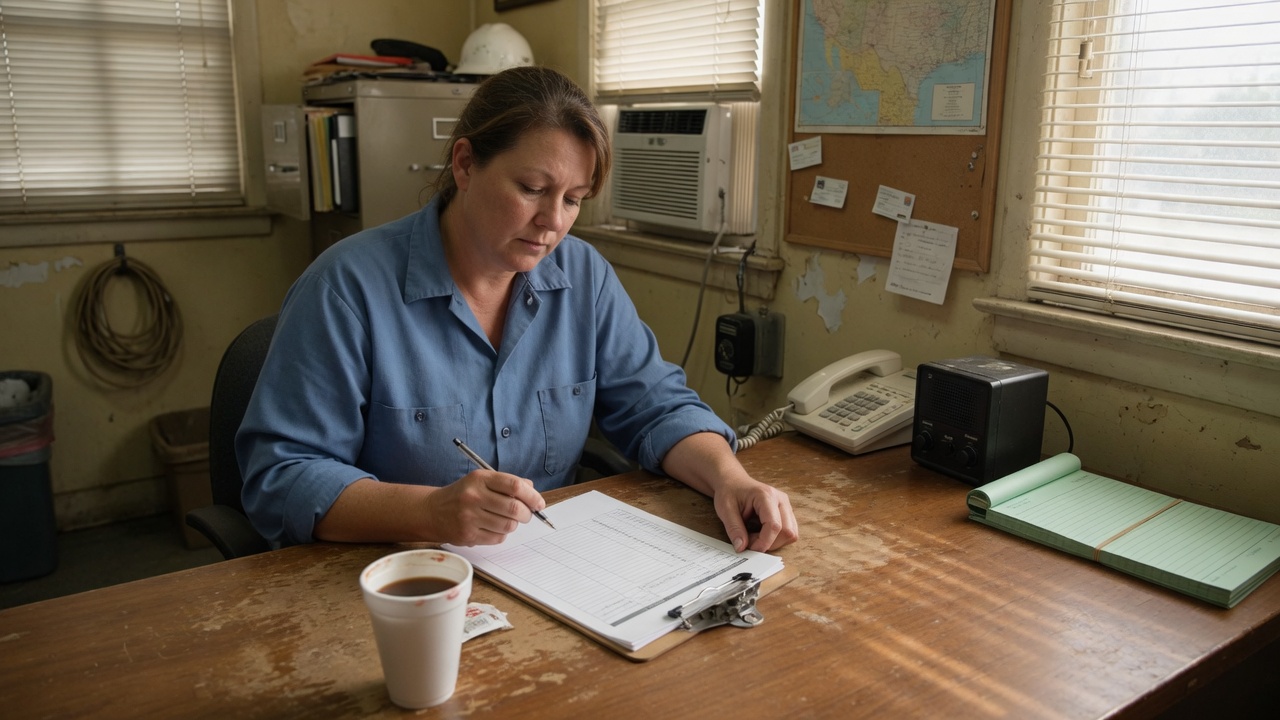
Use AI for dispatch notes. Keep it off the invoice.
The run sheet can be drafted by a model. The invoice cannot. A dispatch note tells the truck where to go and what the caller said. A price, a customer ID, and the name on the ticket are a person's job. Ethical AI is in Frisco, Texas. This is how a trades shop uses a model for dispatch notes and keeps it off the invoice.
Two pieces of paper
Keep them separate, even when they live on a screen. The dispatch note is the run. It answers: which address, which window, what the caller thinks is wrong, which truck, and what to bring if you already know. The invoice is the money. It answers: who was billed, what was sold, what it cost, and who stands behind that number.
Mixing them feels efficient at 7am. One screen, one send, the tech and the bookkeeper both "have it." Then the model fills a blank price because the form had an empty field, or it copies last month's customer number onto today's job, or it writes a warranty line nobody approved. The tech quotes that number in the driveway. You now own a price you did not set.
Split the work on purpose. The note may be fast. The invoice stays slow until a named person has looked at it.
What a dispatch note is allowed to hold
Write the allowed fields down, and do not add a twelfth because the software had a spare box. A clean note has:
- The public name of the shop, so the tech knows which hat they are wearing if you run more than one.
- The service address the caller gave, and the city. One city on the note. Not every city you might drive through.
- The callback number, the same number they dialed from, so the tech is not guessing.
- The arrival window a person promised. Not a window the model invented to sound helpful.
- The caller's words, cleaned up, still theirs. "No cool since noon, upstairs only" is a note. "Failed capacitor, replace today" is a diagnosis the model was not in the attic to make.
- Which truck or which on-call tech, chosen by a rule you wrote: zip, trade, who is already out.
- Parts to stage only when a person already knows them from a previous visit. Not a guess from the symptom.
If a field is not on that list, it does not go on the note. A model is good at turning a rambling call into those lines. It is bad at knowing which line it was not supposed to write.
What the model may draft
Let it clean the caller's sentences into the note. Let it flag a missing address, a missing gate code, or a window that falls outside the hours you published. Let it suggest a truck from the rule you stored. Let it spell the street the way the caller spelled it, and mark low confidence when the audio was a dog and a toddler.
A person reads that draft before it reaches a truck. The read takes a minute. That minute is the product. An unread note that rolls a tech to the wrong town is not automation. It is a second dispatch you will do from the driveway, louder.
The model does not get a button that sends the note and the invoice together. If the software only has one send, do not use it for this. Two steps. Note first. Invoice later, on a different screen, by a person.
What stays off the invoice
The model does not set the price. It does not copy a price from a similar job and call it close enough. It does not invent a customer ID, a tax rate, or a "paid" stamp. It does not write the warranty, the permit line, or the license number. Those are claims. A named person owns them, the same person whose name the customer could ask for.
The customer ID is how you know this house is this account and not the neighbor with the same last name. A wrong ID bills the wrong card on file and attaches the wrong equipment history. That is not a wording problem. Leave the ID blank until a person matches it.
The price is how the shop eats. A drafted "diagnostic $89" that nobody approved becomes the number the tech repeats because it was on the screen. Take prices off the dispatch view. The tech can carry a rate card a person printed. The note does not need the rate card glued to the bottom.
The name on the invoice matches the listing. The model does not get to pick a friendlier name, a shorter name, or the name of a sister company that is easier to spell.
A named person
Pick who reads the notes. The owner, the dispatcher, or the lead tech on call. One name for the morning, written on the board. That person corrects a bad address, rejects a diagnosis the model slipped in, and sets the window if the caller was promised something the board cannot keep.
If that person is in a truck until noon, the notes wait or someone else is named. A queue that "someone will glance at" is how a wrong address ships. The model can stack drafts all night. It cannot be the name on the responsibility line.
When the note is wrong and the tech is already there, the named person calls the customer. They do not send a second generated apology that invents a discount. Say what happened. Offer a real window. Leave the price for the invoice, after the work.
The tech still talks to the house
The note is a head start, not a script to read through the door. The tech confirms the address, confirms what is wrong, and looks at the equipment. If the note says "no cool" and the house has no power to the air handler, the note was a clue. It was not a quote.
Do not let the note promise a repair, a part on the truck, or a same-day finish. Those promises belong to the person who can see the job. A model that adds "we will have you cooling today" is writing a review you have not earned yet.
Missed calls are a different message. If nobody answered, the text back is the public name, the city, and when a person will call. It is not a dispatch note and it is not a price. A missed-call text an HVAC shop can send stays on that side of the line. The run sheet starts after a person has the address.
A week of proof
For five working days, keep a short log. How many notes the model drafted. How many a person edited. How many trucks rolled on an unedited note, and what it cost you in drive time. How many invoices went out with a price a person set on purpose. If unedited notes are rolling trucks, you do not have a drafting tool. You have an unsupervised dispatcher.
Fix the read before you add fields. A smarter draft of a note nobody checks is a faster way to the wrong driveway.
Tonight
- Write the seven fields a dispatch note may hold. Leave price and customer ID off the list.
- Name the person who reads the draft before a truck moves.
- Put the invoice on a second step that the model cannot send.
- Run one real call through the draft and read every line out loud.
- Strike any line that diagnoses, prices, or promises a finish.
Need the run sheet and the invoice kept apart? Start at get started. The model drafts the note. A named person owns the price and the customer ID. Ethical AI · Frisco, TX · 469-669-2728.