True on 2026-09-27 America/Chicago.
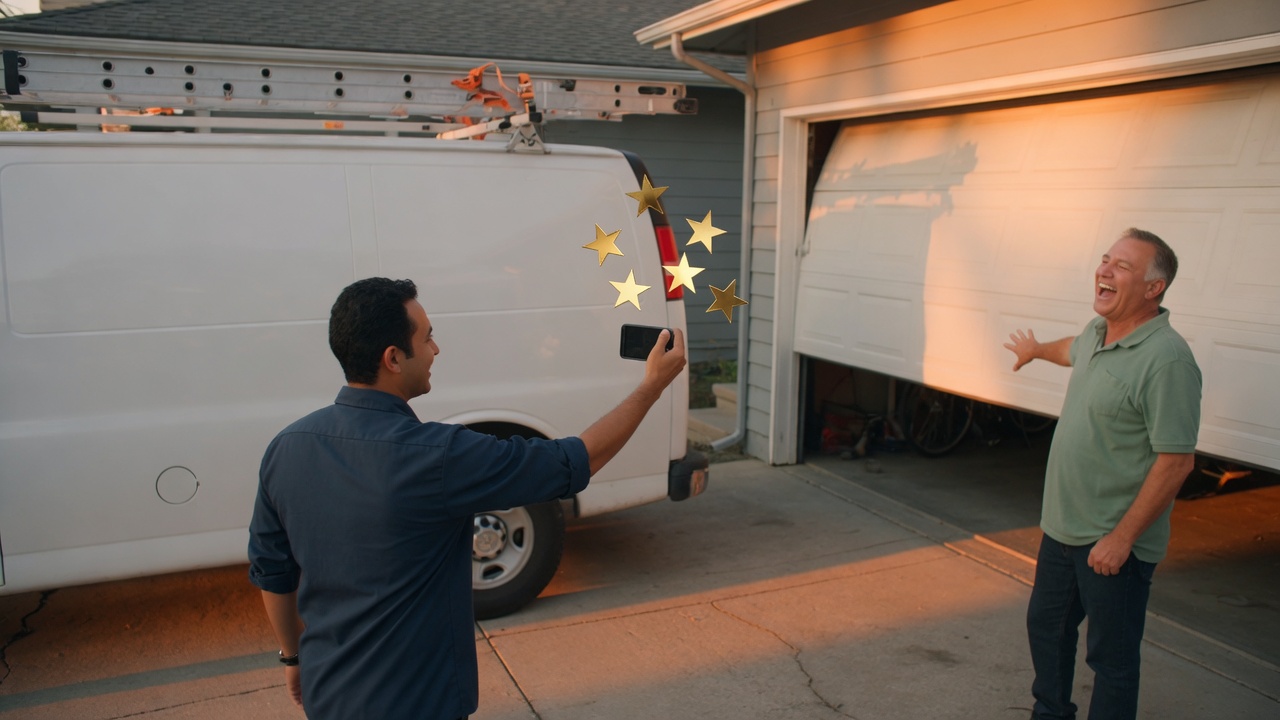
You finished the job. The customer watched the door go up, the air come back on, or the leak stop. They still know your name, and they can still see the truck. That is when you ask for the review on your listing. A week later they remember the bill. They do not remember which part you replaced.
This is for the owner of a trade shop or another small business in the United States. Ethical AI is in Frisco, Texas, and the timing rule does not change with the town. Ask the day the work is done. Send one short text. Put the link to your listing in that text. Then stop.
Ask while the work is still in the room
A review is a customer describing a job they can still picture. On the day of the job, the result is in front of them. Your name is on the invoice they just signed, or on the text thread they just paid. They can say what you did in one sentence a stranger would understand.
Wait until next week and the sentence gets vague. They remember that someone came out. They do not remember the room that got cool again, or the spring you replaced. A vague review is harder for the next customer to trust. The ask also feels like a second chore on a closed job.
The day means this. The work is finished. The customer has seen the result. You ask before you leave, or you send the text the same evening. It does not mean you ask before the job starts. It does not mean you ask while a part is still on order. It does not mean a Friday batch of every job from the last ten days, written from memory.
If the customer is upset, do not ask. Fix the job first. A review request on a bad afternoon asks them to praise work they are not ready to praise. Come back when the work is right. If you can still do that the same day, ask then. Missing the window on purpose is better than a sour review.
What the text should say
One text. Their first name if you have it. The job in their words, not a slogan. One link that opens the review box on your listing. A thank-you. Then stop typing.
A usable text sounds like this.
"Jordan, the opener is in and the door is running. If the work looks right, a short review helps the next person find the shop. Here is the link. Thank you for the call today."
That is the whole message. Do not add a star count. Do not tell them which sentence to type. Do not offer a discount, a free filter, or a gift card for the review. Do not send a second text the same night if they do not answer.
The link has to open the review box for the listing that matches the name on the truck and the name on the invoice. If you have two listings, send the one for the shop that did the work. A link to the other listing teaches the next customer the wrong name.
Send the text from the number they already have. A new number looks like a stranger. If the office sends the texts, the office uses the same words you would use at the truck. The customer should recognize the job in the first line. If they have to ask which visit you mean, the job is unnamed or the text is late.
What to leave out of the ask
Leave the review request out of the listing description. The description tells a stranger what the shop does. The ask goes to the person who already hired you.
Leave out a bought review, a swapped review, or a review your crew wrote and posted under the customer's name. The words have to be the customer's. If you write the paragraph and they only tap post, it is still your sentence. The next customer can tell when every review sounds like the same person.
Leave out every town you might drive to. This text is about one job at one address. Leave out a promise that the review will move the listing up a map, fill the phone, or change the month's revenue. You do not control that. You control whether you asked a real customer, on the day the work was done, with a link to the right listing.
Leave out a photo they did not ask for, a coupon, and a second link. If they still owe the invoice, that is a different text. Do not staple the review ask to a collections message.
Write the text once, then reuse it
You write this text one time. After that you change only the name and the job. The link stays. The thank-you stays. A new draft every evening is how slogans creep back in.
Start with five facts, in your own words, before any draft:
- The customer's name. - The job you finished today. - That they saw the result. - The review link for the matching listing. - The thank-you.
Those five facts are the only source. A draft may arrange them. It may not invent a sixth fact.
Pass 1. Turn the five facts into three sentences. You can write them, or a model can arrange only those facts. If a discount, a star number, or a second trade appears, cut it.
Don't have a model for the first draft? No problem. Write the three sentences in the notes app in the truck.
Pass 2. Mark any offer, any town, any trade you did not do today, and any promise you do not control. Cut those.
Don't have a second tool? No problem. Read the text out loud. If you would not say a line at the kitchen table, it goes.
Pass 3. Shorten it to one name, one job, one link, and one thanks.
Pass 4. Check the short text against the five facts. Cross out any line the facts do not support.
Pass 5. The customer needs the link to open the review box, and they need to know which job you mean. If the link is wrong, fix the link. Do not add a fourth sentence about the whole shop.
Save the finished text where the person who closes the job can find it. The office and the tech use the same text. If you change the link, change it in that one place.
When you send it
Send it before you leave, when the customer has seen the result. If they have already gone inside, the same-evening text is still the same day. Name the job so they know which visit you mean. A text two days later asks them to reconstruct the visit. Many will swipe it away.
If a property manager paid and the tenant watched the work, ask the person who hired you. That is the name on the invoice. A tenant can be glad the air is back and still be the wrong person to ask.
One ask per job. If they do not review, do not start a chain of reminders. You can mention it once more on a later real visit. Close this job and send the text before you drive to the next one. The wrong name on a request is worse than no request.
If the job is not finished, the text waits. A callback or a part on order is not a finished job. Asking early gets you a review about the unfinished part.
Keep the listing able to receive it
The text fails when the listing name is wrong, the phone is wrong, or the link does not open the review box. Before you save the text, open the link on your phone. You should land on the review box for the shop name on the truck. If the name differs, fix the listing or the link before a customer sees the text.
Open that link once a month. A moved listing or an old phone number will break a text that used to work. The words can stay. The link has to stay true. If the invoice name and the listing name drift apart, put one shop name in both places before the next ask. The phone on the listing should reach the shop that did the work. Ethical AI teaches owners to keep the public name, the invoice, and the listing on the same shop.
The habit at the end of the day
Finished jobs get the text. Unfinished jobs do not. You do not sit down on Sunday and ask for ten reviews from memory. Memory is how the wrong job gets the wrong link, and how a customer who had a problem gets the same cheerful text as everyone else.
Write the customer's name and the job on the work order when you close it. The text uses those two lines plus the saved link.
If a week goes by and the texts never went out, do not blast the old jobs. Start with today's finished work. The old window is closed.
Ethical AI, Frisco, TX, 469-669-2728. If you want a second set of eyes on the text and on the listing it points to, get started with Ethical AI.